Why Cedar City's Hard Water Kills Water Heaters (and What to Do)

If your water heater in Cedar City quit years before you expected it to, the water flowing into it is a big part of the story. Iron County runs hard, mineral-heavy water, and every gallon that heats up in your tank leaves a little calcium and magnesium behind. Over time that buildup does real damage to the tank, the burner, and the anode rod. This post explains what's actually happening inside the unit and the maintenance that genuinely slows it down, so you get more years out of the heater you already own.
Does hard water damage water heaters?
Yes, and the mechanism is straightforward. When hard water heats up, dissolved calcium and magnesium fall out of solution and settle at the bottom of the tank as sediment. On a gas unit that sediment layer sits directly over the burner and insulates the water above it, so the burner runs longer and hotter to push heat through the crust. On an electric unit the sediment cakes onto the lower heating element and cooks there. Either way you're paying to heat mineral scale instead of water.
That rumbling or popping you hear when the burner fires is sediment trapping pockets of water and letting them boil. It's not a harmless noise. The longer the burner has to fight through that layer, the faster the steel tank fatigues and the sooner the whole unit fails.
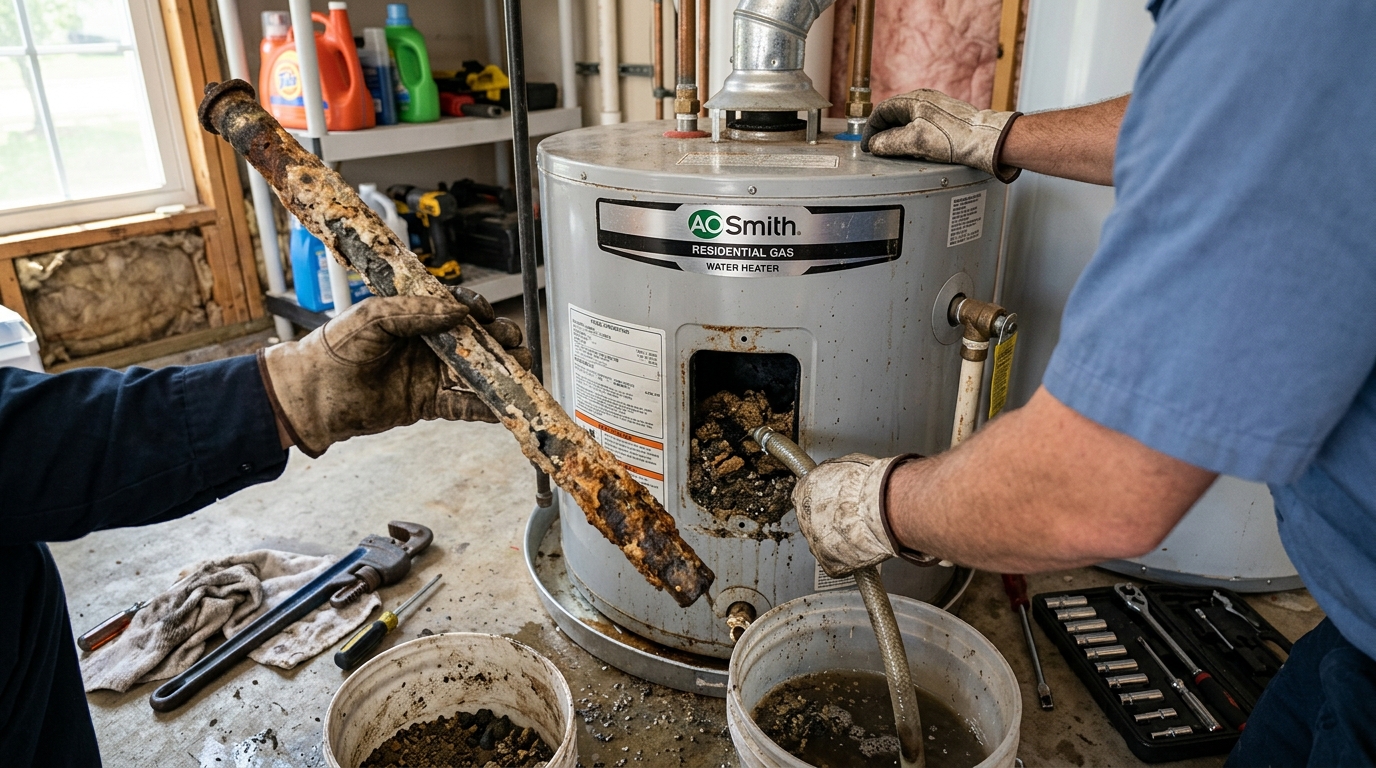
Anode rod: the sacrificial part hard water eats first
Inside every tank water heater is a metal rod, usually magnesium or aluminum, that exists to corrode so the steel tank doesn't. It's called a sacrificial anode, and it's the single most important part in a hard-water home. The minerals and dissolved oxygen that would otherwise attack the tank lining go after the rod instead. When the rod is used up, corrosion moves on to the tank itself, and once the tank starts rusting through there's no repair, only replacement.
The catch is that hard water consumes the anode rod faster than the manufacturers' "check it around five years" guidance assumes. In water like ours, a rod can be mostly gone well before that. Pulling and inspecting the anode is a cheap, quick job compared to a full water heater replacement, and swapping a spent rod in time is the closest thing there is to extending a tank's life on purpose.
Replacing an inexpensive anode rod on schedule is the difference between a heater that lasts and one that rusts out from the inside years early.
Water heater maintenance in Cedar City and Iron County
Two maintenance habits make the biggest difference against hard water, and neither is complicated:
- Flush the tank annually. Draining a few gallons through the bottom drain valve once a year clears the loose sediment before it hardens into a crust the burner has to fight. A tank that's never been flushed builds a layer that eventually can't be rinsed out at all.
- Inspect the anode rod every couple of years. Because hard water burns through the rod quickly, checking it and replacing it when it's spent protects the tank lining while there's still tank left to protect.
If you've got a tankless unit, the equivalent is a periodic descaling flush with a pump kit. Tankless heat exchangers have narrow passages, and scale that would take years to matter in a tank can choke a tankless unit's flow much faster in hard water.
Here's the honest part most maintenance checklists skip: if your tank is already past roughly ten to twelve years, has never been flushed, and is running on its original anode rod, maintenance won't undo the damage that's already done. At that point you're managing borrowed time, and it's worth an honest look at whether repair or replacement is the smarter money. We'll tell you which situation you're actually in rather than pushing the more expensive option. See our water heater repair and replacement page for how we approach that call.
Signs you need water heater repair
A few symptoms are worth catching early, because hard-water damage tends to snowball once it starts:
- Popping or rumbling from the tank means sediment is cooking on the burner or element.
- Rusty or discolored hot water, or a metallic smell, points to internal corrosion or a fully spent anode rod.
- Hot water that runs out fast or swings temperature often traces to sediment insulating the burner or a failing element.
- Any water pooling at the base of the tank is the one that isn't a repair. Tank-body leaks mean replacement.
We break these down in more detail on our guide to the signs your water heater needs attention, which is worth reading before you decide whether to call.
Not sure where your heater stands?
If you're hearing rumbling, seeing rusty water, or just can't remember the last time your tank was flushed, a quick look tells you a lot. Call us at (435) 260-5227 or request a free quote, and we'll help you get more life out of the heater you've got in Cedar City's hard water.