
01

Family-owned · Cedar City Local
Leak Detection and Slab Leak Repair in Cedar City and Iron County
Call directly(435) 260-5227Free Estimate
Real estimate in 60 seconds.
Tell us the job — we'll follow up within one business day. No pressure, no upsells.
Why Choose Cedar City Plumbing and Drain Cleaning, Inc. for Leak Detection and Slab Leak Repair in Cedar City and Iron County
Leak detection in Cedar City is what you need when the water bill jumped with no explanation, there's a warm spot on the floor, or you can hear water running with every faucet shut off. Those are the classic signs of a hidden leak, often a slab leak under the concrete. Cedar City Plumbing and Drain Cleaning, Inc. is a family-owned, fully insured company serving Iron County, and our whole approach is built to find the leak before we open anything up: we use electronic acoustic and thermal equipment to pinpoint the source first, so we cut in one spot instead of chasing the leak across your floor. If water is actively causing damage, call (435) 260-5227. We answer 24 hours a day.
Here's the local reality that drives most of the hidden-leak calls we run in this area. Southern Utah water is hard and mineral-heavy, and over the years that water is rough on copper supply lines: the minerals and water chemistry pit copper from the inside until a pinhole opens, usually where a line runs hot. On top of that, a lot of Iron County homes sit on soil that shifts with moisture and the seasons, and that slab movement stresses the pipes running under the concrete until a joint or a line finally gives. Put those two together and you get the leak that shows up as a wet spot, a spiking bill, or a foundation that stays damp. Cost depends on where the leak is, how the pipe is accessed, and whether a spot repair or a reroute is the right fix, so contact us for an accurate estimate.
Under-slab pipe repair in a Cedar City home, a targeted slab leak repair made after locating the leak electronically.
Water Leak Detection: We Find It Before We Open Anything
Continue
Water leak detection done right means finding the exact spot before anyone swings a hammer, and that's the part that separates a clean repair from a torn-up floor. A hidden leak inside a wall, under a slab, or in a buried yard line doesn't announce where it is. What it gives you are symptoms: an unexplained jump in the water bill, the sound of running water with everything shut off, a warm or damp spot on the floor, low water pressure, or a foundation area that never fully dries. We start there, then we confirm it with equipment rather than guesswork.
Here's how we actually locate it. We can pressurize and isolate sections of the system to narrow down which line is losing water. We use acoustic listening equipment that hears the sound of water escaping under a slab or inside a wall, and thermal imaging that reads the temperature difference a hot-water leak leaves behind. That's how we mark the spot before we ever open the concrete or the drywall. The point is simple: cut once, in the right place, not everywhere. If you suspect a hidden leak, call us at (435) 260-5227 and we'll find it before we quote a repair.
Signs You Have a Hidden or Slab Leak
Details below
Here are the signs of a hidden or slab leak we get called for most. If two or more of these describe your home, it's worth having the system checked before the damage spreads.
02
A Warm or Damp Spot on the Floor
03
The Sound of Running Water
04
A Drop in Water Pressure
05
Mold, Mildew, or Damp Finishes
06
Foundation or Floor Cracks

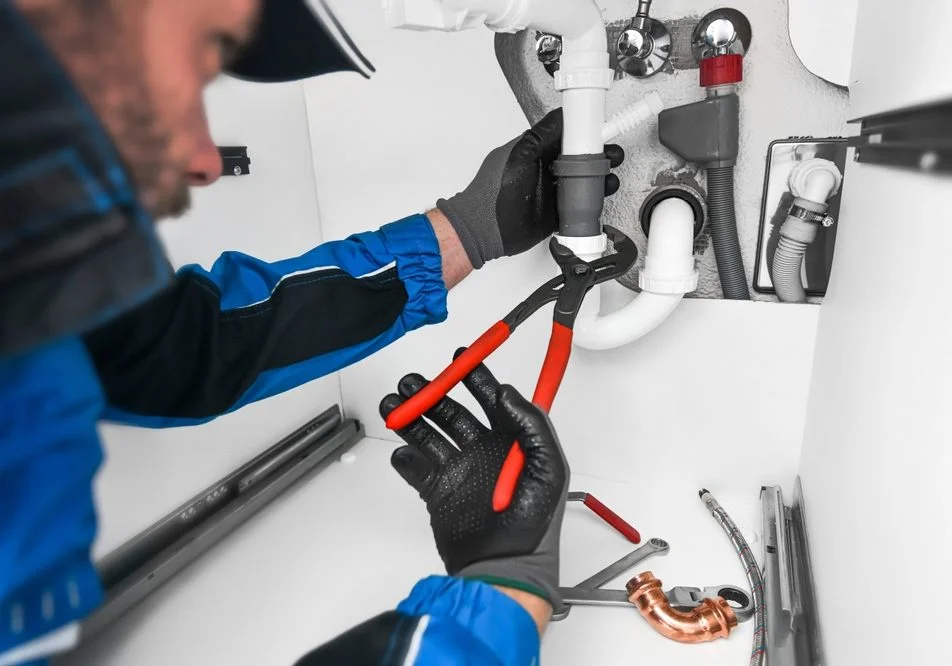
A hidden supply-line leak being repaired under a sink, located before any finish work was opened up in Cedar City, UT.
Slab Leak Detection: Locating a Leak Under Concrete
Continue
Slab leak detection is the part of this work where the electronic equipment earns its keep, because a leak under a concrete slab gives you almost nothing to go on from the surface. You can't see the pipe, you often can't hear it clearly with the naked ear, and guessing wrong means jackhammering concrete in the wrong place. That's exactly what we're built to avoid.
Here's the sequence we run on a suspected slab leak:
- Confirm it's a slab leak, not something else. We check for the tells, a warm spot, a spiking bill, the sound of water, then isolate the plumbing to rule out fixtures, the water heater, and the irrigation line.
- Pinpoint the location. We use acoustic listening equipment to hear the escaping water through the slab and thermal imaging to read the heat signature of a hot-water leak, and we mark the exact spot.
- Choose the repair. Depending on access and where the line runs, that's either a targeted spot repair through a small concrete cut, or rerouting the affected line through the wall or ceiling to bypass the slab entirely.
- Verify it's fixed. We re-pressurize and confirm the line holds before closing anything up.
"The whole reason we locate electronically first is so we cut concrete once, in the right place, instead of opening the floor in three spots hoping to find the leak. That's the difference between a repair and a demolition."
Want it found before the damage spreads? Call (435) 260-5227 or get a free estimate and we'll scope it.
Under-slab pipe repair in a Cedar City home, a targeted slab leak repair made after locating the leak electronically.
Repair Slab Leak: Spot Repair or Reroute
Continue
Repairing a slab leak comes down to one honest question: is the rest of the line still sound, or is the pipe failing along its length? The answer decides whether a spot repair or a reroute is the right call, and we won't push the bigger job when the smaller one holds.
A single, isolated leak on a copper line that's otherwise in good shape is often a spot repair. We access the pipe through a targeted cut, fix the failed section, and close it back up. Where a spot repair stops making sense is a line that's already pinholed in more than one place, because copper that's failed once from the inside tends to fail again nearby, and cutting the slab repeatedly costs more than solving it once.
The same logic applies to a leaking drain line under the slab. Drain lines in Cedar City are often PVC on newer homes and older material on the rest, and a cracked PVC pipe leak under a slab gets located the same way and repaired through a targeted access point when the surrounding pipe is sound. What drives the cost on any of these is access, how deep and where the line runs, and whether a spot repair or a full reroute is the right fix. We lay out both options with straight tradeoffs before any work begins. Ready when you are: get a free estimate and we'll come back with a straight answer.
FAQ Common questions
When Slab Leak Repair Is the Wrong Call
Answers below
The honest version of when NOT to open up the slab.
When is slab leak repair NOT necessary? +
Don't jump to tearing up the floor on a hunch. A wet spot near a fixture, a water heater, or an appliance is often a surface leak you can see and fix without ever touching the slab, and paying for slab leak repair when the leak is at a visible supply line is spending money you don't need to. The honest first step is detection: we isolate the system and confirm the leak is actually under the concrete before anyone cuts anything. It's only when acoustic and thermal equipment place the leak under the slab that a slab repair is warranted. If you're not sure which one you've got, call us and we'll locate it before quoting a repair.
Get in touch Call now (435) 260-5227
Fully Insured. Answered 24/7. No Dispatch Center.
Whether it's a spiking water bill, a warm spot on the floor, or water showing up where it shouldn't, Cedar City Plumbing and Drain Cleaning, Inc. handles leak detection and slab leak repair across Iron County and the surrounding region. When a leak turns up in a drain or sewer line, we also run a camera inspection to locate it underground. Call (435) 260-5227 and you reach a local, family-owned operation, not an answering service or a regional call center. The person who answers is connected to the person who shows up. We're fully insured, available 24/7 for leak emergencies, and same-day service is available during regular hours for non-emergency work. For larger repairs we also offer financing options so cost doesn't have to mean delay.
FAQ Common questions
Frequently Asked Questions
Answers below
How do I know if I have a hidden water leak? +
The most common early sign is a water bill that jumps with no change in how you're using water, because a hidden leak runs around the clock. Other tells are the sound of running water with every faucet shut off, a warm spot on the floor over a hot-water slab leak, a drop in water pressure across the whole house, or areas of flooring, drywall, or foundation that stay damp. Any one of those is worth a look. When two or more show up together, it's worth having the system checked before the water causes structural or mold damage. We locate the leak electronically before opening anything up.
What is a slab leak and what causes them in Cedar City homes? +
A slab leak is a leak in a water line running under the concrete slab your home sits on. They happen for two reasons that are both common in this area. First, mineral-heavy Southern Utah water is hard on copper: over the years it pits the pipe from the inside until a pinhole opens, most often on the hot-water side where heat speeds up the corrosion. Second, soil that shifts with moisture and the seasons puts stress on the pipes buried in and under the slab until a joint or line gives. A slab leak shows up as a warm spot on the floor, a spiking water bill, or a foundation area that stays damp. We confirm it with acoustic and thermal equipment before recommending a repair.
How do you find a leak without tearing up the whole floor? +
We don't guess and we don't open the floor to look. We start by isolating and pressurizing sections of the plumbing to narrow down which line is losing water. Then we use acoustic listening equipment, which hears the sound of water escaping under the slab or inside a wall, and thermal imaging, which reads the temperature difference a hot-water leak leaves behind. Between the two, we mark the exact spot before any concrete or drywall comes out. That's the whole point of electronic detection: we cut once, in the right place, instead of chasing the leak across your floor.
What determines the cost of a slab leak repair? +
Cost depends on the specifics of the leak, not a flat rate, so an honest number comes after we've located it. The biggest factors are where the leak is and how the pipe is accessed, since a line under an open crawlspace is far easier to reach than one under a finished slab floor. The second is the fix itself: a single isolated leak on otherwise-sound pipe is often a targeted spot repair, while a line that's pitting in more than one place is usually better rerouted through the wall or ceiling than cut open at the slab repeatedly. The condition of the surrounding pipe and how deep the line runs also matter. We locate the leak first, then lay out spot-repair versus reroute with straight tradeoffs before any work begins. Call (435) 260-5227 or request a free estimate.
Can a slab leak be repaired without breaking up the whole floor? +
Often, yes. Once we've pinpointed the leak, we look at whether the leak point is reachable through a small, targeted concrete cut or whether rerouting the affected line through the wall or ceiling is the better approach. Full slab demolition is rarely necessary for a single-point leak. A spot repair works well when the rest of the line is sound. A reroute makes more sense when the pipe is failing in more than one place, because it takes the failing line out of the slab for good and avoids repeat concrete cuts. We explain both options with honest tradeoffs before any work begins.
Do you repair leaks in regular pipe and PVC lines, not just slab leaks? +
Yes. A leaking pipe doesn't have to be under a slab to be worth locating precisely. We repair leaks on copper and PEX supply lines, at fittings and valves, in walls and ceilings, and on drain lines. For a cracked or leaking PVC drain line, which is common on newer Cedar City homes, we locate the break and repair it through a targeted access point when the surrounding pipe is sound. The approach is the same as any leak: find the exact spot first, then make the smallest repair that actually solves the problem. If you've got a leak you can't pin down, call us at (435) 260-5227 and we'll locate it.