Cedar City (435) 260-5227
Cedar City Plumbing and Drain Cleaning, Inc.
Gas Line Repair and Installation in Cedar City and Iron County
Family-owned · Cedar City Local

Gas Line Repair and Installation in Cedar City and Iron County

Call directly(435) 260-5227
Free Estimate

Real estimate in 60 seconds.

Tell us the job — we'll follow up within one business day. No pressure, no upsells.

No obligation · Responds within 1 business day

Why Choose Cedar City Plumbing and Drain Cleaning, Inc. for Gas Line Repair and Installation in Cedar City and Iron County

You smell gas, or you're adding a gas range, dryer, or water heater and need a line run to it. Gas line repair in Cedar City is not a job to guess at, and it's not a job to leave sitting. Cedar City Plumbing and Drain Cleaning, Inc. is a family-owned, fully insured company serving Iron County, and our approach on every gas job is the same: we pressure-test the line to find exactly where it's losing gas, then pull the permit before we quote a repair or a new install. If you smell gas right now, leave the building and call us from outside at (435) 260-5227. We answer 24 hours a day.

Here's the local reality that shapes gas work in this area. A lot of Iron County's older housing stock was piped in black iron, and black-iron gas pipe corrodes slowly from the inside and the outside over decades, so the leaks we find most often are at aging threaded joints and buried sections that have started to rust through. Newer runs are more often CSST or coated steel, which changes how we test and repair them. Gas work here also means coordinating with Dominion Energy, the natural gas utility for this region, and with the local permit office, because gas is one of the few plumbing jobs where an inspection is not optional. Cost depends on the length of the run, the pipe material, access, and whether the meter or utility side is involved, so contact us for an accurate estimate.

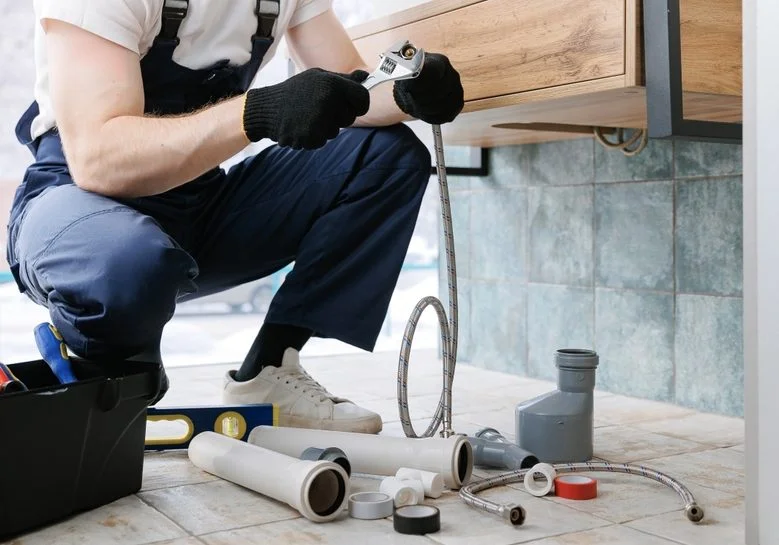
Gas water heater and gas supply line installed in a Cedar City home, a gas connection we repair across Iron County.

Gas Line Repair: We Pressure-Test Before We Quote

Continue

Gas line repair starts with finding the leak precisely, not patching where we think it might be. Most calls come in one of two ways: someone smells the rotten-egg odor of the mercaptan additive, or a gas appliance stops working and the fault traces back to the supply line. Either way, the first thing we do is isolate the section and run a pressure test, which pressurizes the line and shows us whether it's holding or bleeding down, and roughly where.

Once we know where the fault is, the repair matches the pipe. A leaking joint on otherwise-sound black iron gets remade properly. A section that's corroded through gets replaced with new pipe rated for the job. A failing CSST connection or bonding issue gets corrected to code. What we don't do is bandage a line that's failing along its whole length when the honest fix is to replace the run. If you smell gas, turn off the main gas shutoff at the meter only if you can reach it safely, leave the building, and call us at (435) 260-5227 from outside.

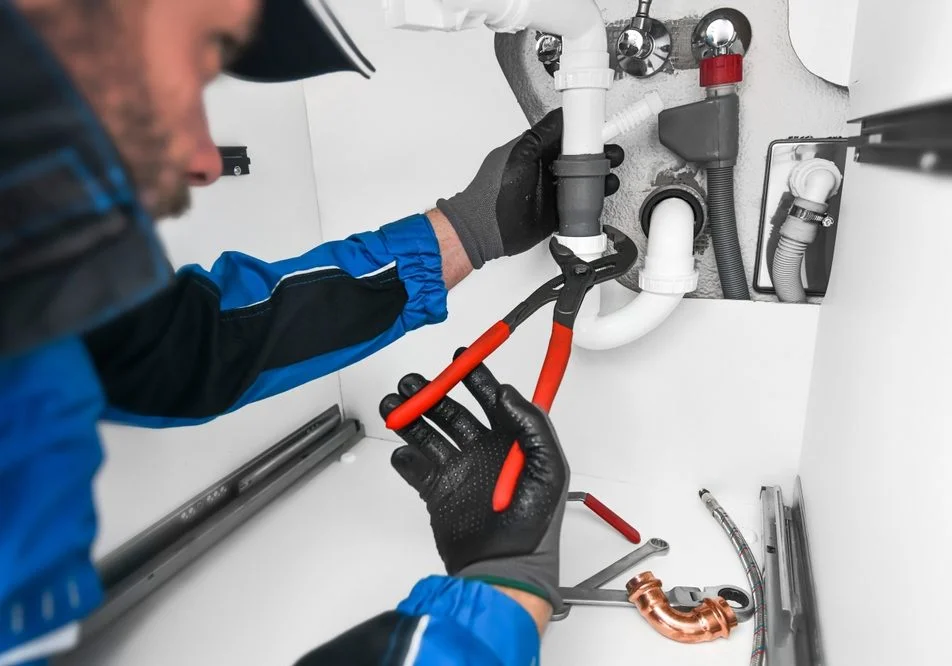
Gas and supply pipe repair and installation work in progress on an Iron County plumbing system.

Signs You Have a Gas Line Problem

Details below
Here are the signs that point to a gas line problem, and which ones mean you stop and call right now. If you smell gas, don't wait for the rest of the list.
01

The Rotten-Egg Smell

The rotten-egg smell is the mercaptan added to natural gas so you can detect it. If you smell it, leave the building, don't touch switches or your phone inside, and call from outside. This is the one that never waits.
02

Hissing Near a Line or Appliance

A hissing or whistling sound near a gas appliance, the meter, or an exposed line points to gas escaping under pressure. Combined with an odor, treat it as an active leak and get everyone out first.
03

An Appliance That Won't Stay Lit

A gas range, water heater, or furnace that won't light or keeps cutting out can trace back to a supply-line problem rather than the appliance itself. We test the line to tell the difference before anyone buys a new appliance.
04

Dead Vegetation Over a Buried Line

Dead or dying plants in a line over a buried gas line, or dirt blowing up near the line, can signal an underground leak. Buried black iron in older Iron County yards is a common spot for slow corrosion leaks.
05

An Unexplained Spike in Your Gas Bill

A higher-than-usual gas bill with no change in usage can mean gas is escaping somewhere between the meter and your appliances. It's worth a pressure test to confirm the line is tight.
06

Aging Black-Iron Pipe

Older black-iron pipe corrodes at the joints and along buried runs over the decades. If your home was piped in black iron and has never been checked, an inspection tells you where you stand before a leak forces the issue.
Threaded pipe joint repair, the most common leak point we find in older black-iron gas lines in Cedar City.

Gas Line Installation: Permit, Sizing, and Inspection

Continue

Installing a gas line is where the permit and the utility coordination matter most, and it's why running a new line is not a same-afternoon job you want done off the books. Whether you're adding a gas range, a dryer, a water heater, a furnace, a fire pit, or a pool heater, the new run has to be sized for the appliance's demand, routed and secured to code, and inspected before it's put into service.

That's the part homeowners underestimate: a gas line that's undersized for the load starves the appliance, and one that isn't inspected is a liability the day you try to sell the house. We handle the whole sequence, and here's how it goes:

  1. On-site assessment. We confirm the appliance's gas demand, check the capacity of your existing system and meter, and map the route for the new run.
  2. Permit and utility coordination. We pull the permit with the local office and coordinate with Dominion Energy where the meter or utility side is involved.
  3. Install and connect. We run and secure new pipe sized for the load, in the right material for the application, and make the appliance connection.
  4. Pressure test and inspection. We pressure-test the finished line to confirm it holds, then it's inspected before the gas is turned on.

Running an underground gas line, to a detached garage, a shop, an outdoor kitchen, or a pool heater, adds a trenching and burial-depth step, and coated or poly pipe rated for direct burial rather than interior black iron. We handle those too. Want a straight number for your project? Get a free estimate or call (435) 260-5227.

Gas water heater and gas supply line installed in a Cedar City home, a gas connection we repair across Iron County.
FAQ Common questions

When a New Gas Line Is the Wrong Call

Answers below
The honest version of when NOT to pay for a full new gas line.
When is a brand-new gas line NOT necessary? +
Don't run a brand-new dedicated line when your existing gas system already has the capacity and a nearby stub. If you're adding an appliance close to an existing line, a manifold, or an accessible run, extending or tapping the existing system is often the right call and costs less than a full new run from the meter. Where a new dedicated line genuinely is warranted is when the existing system is already at capacity, when the appliance's demand is high, like a tankless water heater or a pool heater, or when the run is long enough that undersized pipe would starve the appliance. We check the capacity of what you've got before quoting a new line, so you're not paying for pipe you don't need.
Get in touch

Fully Insured. Answered 24/7. No Dispatch Center.

Whether you smell gas and need a leak found now, or you're adding an appliance and need a line run right, Cedar City Plumbing and Drain Cleaning, Inc. handles gas line repair and installation across Iron County and the surrounding region. We also service the gas water heater and gas line side of the same system. Call (435) 260-5227 and you reach a local, family-owned operation, not an answering service or a regional call center. The person who answers is connected to the person who shows up. We're fully insured, available 24/7 for gas emergencies, and same-day service is available during regular hours for non-emergency work. For larger installs we also offer financing options so cost doesn't have to mean delay.

Call now (435) 260-5227
Or send your info
Threaded pipe joint repair, the most common leak point we find in older black-iron gas lines in Cedar City.
FAQ Common questions

Frequently Asked Questions

Answers below
How do I know if I have a gas leak and what should I do before the plumber arrives? +
Natural gas is odorless on its own, so a mercaptan additive is mixed in to give it the rotten-egg smell you can detect. If you smell that, don't flip any electrical switches, don't use your phone inside the building, and don't try to find the leak yourself. Turn off the main gas shutoff at the meter only if it's safely accessible, get everyone out of the building, and call from outside. Our licensed technicians locate the leak with a pressure test and calibrated detection equipment and make the repair to code. We answer 24 hours a day at (435) 260-5227.
What determines the cost of a gas line installation? +
Cost depends on more than length. The pipe material matters, whether it's black iron, CSST, or coated pipe for burial. The route matters, since running through finished walls or under a slab is more involved than an open basement or crawlspace. The appliance's gas demand sets the required pipe size. And whether the meter or utility side is involved changes the scope. On top of the pipe work, a gas line install includes the permit and the required inspection, which is not optional on gas. Because those variables swing the number a lot, we assess the job on-site and give you a firm quote rather than a guess over the phone. Call (435) 260-5227 or request a free estimate.
Can you install a gas line for a new dryer? +
Yes, and it's a common request. Adding a gas dryer means running a properly sized line to the laundry location and making a code-compliant connection with a shutoff valve and an approved connector. If there's already a gas line nearby, say your water heater or furnace is close to the laundry area, we can often extend from the existing system rather than running a new line from the meter, which keeps the job smaller. If the laundry is far from any existing gas, it's a longer run. Either way the finished line is pressure-tested and inspected before it's put into service. We'll tell you which situation you're in after we see the layout.
Can you run an underground gas line to a detached building or outdoor appliance? +
An underground gas line, to a detached garage, a shop, an outdoor kitchen, or a pool heater, uses different pipe than an interior run. Instead of interior black iron, we use pipe rated for direct burial, typically coated steel or approved polyethylene, and we bury it to the required depth so it's protected from digging and frost. The run is sized for the appliance's demand, pressure-tested, and inspected like any gas line. In Cedar City's rocky soil, trenching for a buried line takes more work than in soft ground, and we factor that into the plan. If you're adding gas to an outbuilding or outdoor appliance, call us and we'll scope the route.
Why do older Cedar City homes tend to have gas line problems? +
Older homes in this area were commonly piped in black iron, which corrodes slowly at threaded joints and along buried sections over the decades. That makes aging joints the most common leak point we find in Iron County's older housing stock. It doesn't mean black iron is unsafe, it means a system that's several decades old and has never been inspected is worth checking before a leak forces the issue. Newer work is more often CSST or coated steel. If your home still runs on original black iron and you've never had it looked at, a pressure test tells you where the system stands. We'll show you what we find before recommending any work.
Do I really need a permit for gas line work? +
Gas is one of the few plumbing jobs where a permit and inspection are not optional, and that's a protection for you, not red tape. A permitted, inspected line means the work was sized, routed, and pressure-tested to code, which matters for safety and comes up when you sell the home. Skipping the permit to save time can leave you with an unpermitted line that a buyer's inspector flags later. We pull the permit and coordinate the inspection, and where the meter or utility side is involved we coordinate with Dominion Energy. You get a line that's documented and done right. We answer 24 hours a day at (435) 260-5227.

Related